The Evolution of Replica Watch Movements: From Imitation to Innovation
In the circle of watch collectors and enthusiasts, replica watches have always been a controversial yet unavoidable presence. The soul of replica watches – the movement, its development trajectory is a condensed history of watchmaking craftsmanship games and technological breakthroughs. From the initial dependence on Swiss original movements to the current dominance of domestic movements, each iteration of replica watch movements reflects the changes in the industry ecology.
I. The Era of Swiss Movement Monopoly (Late 20th Century – Early 21st Century)
In the embryonic stage of replica watches, they almost entirely relied on universal movements from Switzerland’s ETA Group. At that time, ETA models such as 2824-2 and 2892-A2, with their stable timekeeping performance, became the standard configuration for brands like Tissot and Longines, and naturally became the first choice for replica watch manufacturers. These movements flowed into the mainland through Hong Kong parallel channels, and the assembled replica watches were highly sought after due to their “pure bloodline”.
However, this good situation did not last long. Switzerland’s movement embargo policy against the mainland caused the prices of popular models like ETA 7750 to soar to ten thousand yuan. This “strangulation” dilemma, on the contrary, became a catalyst for the rise of local movements.
II. The Breakthrough of Domestic Movements (2010s)
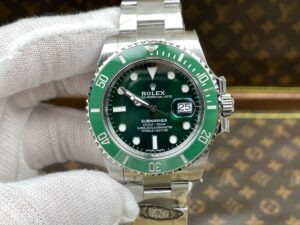
Seagull Watch Factory took the lead in launching a counterattack. Its ST2130 movement perfectly replicated the structure of ETA 2824, quickly occupying the mid-to-low-end market with its hundred-yuan price and 90% similarity. Later, Shanghai 7750 chronograph movement and Dandong 3135 movement (designed specifically for Rolex Submariner replicas) came out one after another, forming a “three pillars” pattern.
It is worth mentioning that the Dandong 4130 movement, by improving the automatic rotor structure, increased the power reserve to 70 hours, with an accuracy of ±5 seconds per day, successfully breaking the technical barriers of Swiss chronograph movements and being called the “pride of domestic production” in the industry.
III. The New Stage of Technical Game (2020s – Present)
The current replica watch movements have entered the era of “micro-innovation”. The P9000 movement developed by VS Factory solved the historical pain point of Panerai replica watches by adding a quick-set date function; the 8500 movement of XF Factory adopted co-axial escapement technology, achieving 95% similarity in appearance to the original Omega.
At the same time, Japan’s Citizen 9015 movement, with its ultra-thin characteristics and stable performance, has become the first choice for replicas of IWC, Jaeger-LeCoultre and other brands. This situation of multi-national movement competition has formed a benign competitive ecology in the replica watch market.
From simple appearance imitation to core structure innovation, the development history of replica watch movements is not only a history of technological catch-up but also a microcosm of the global watchmaking industry division of labor. For collectors, understanding this history can help them more clearly judge the true value of a replica watch.